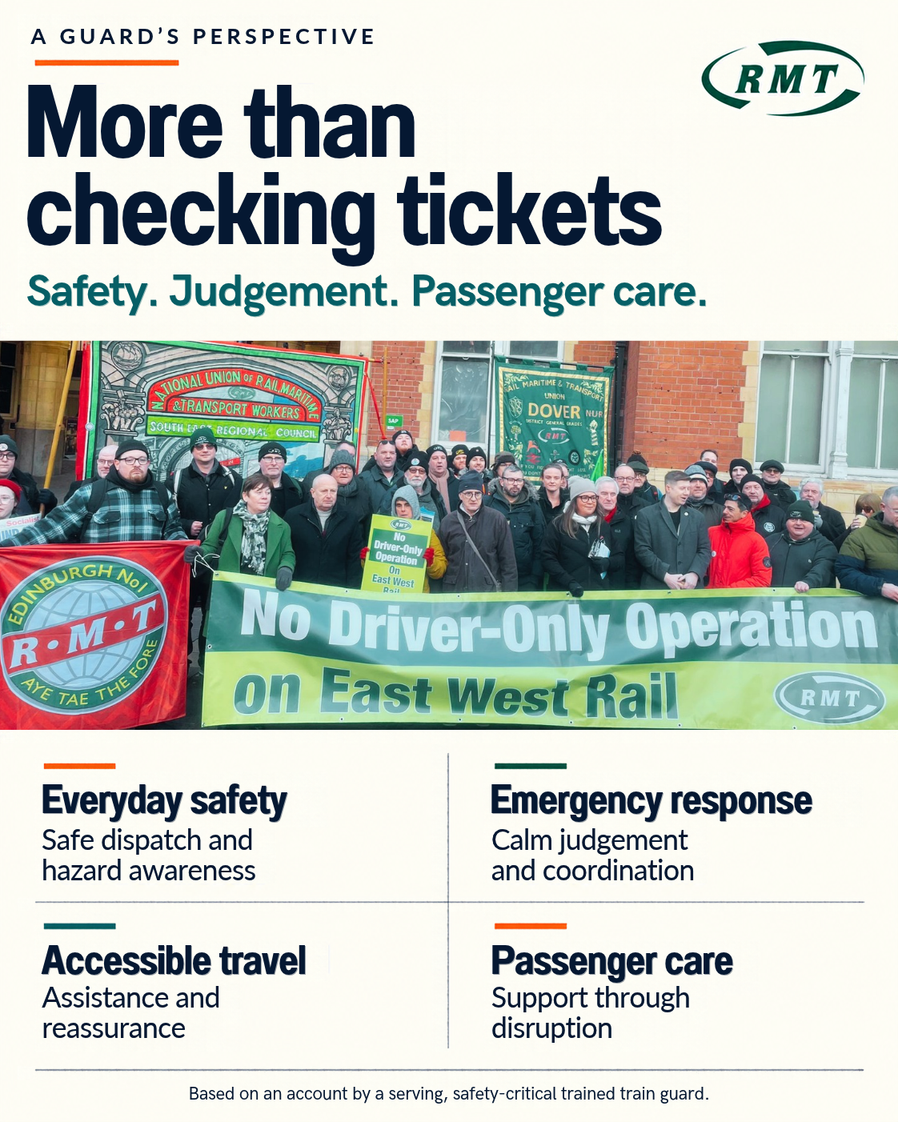
For passengers, a train guard may be the person who checks tickets, makes announcements or offers help. A serving, safety-critical trained guard’s account reveals a wider role: responding to emergencies, identifying hazards and supporting passengers when journeys become difficult.
The challenge
A railway journey can change quickly. A train may develop a fault, a passenger may need urgent assistance, or disruption may leave people unsure how to reach their destination. Serious incidents create additional challenges, particularly where passengers are close to moving trains or electrified infrastructure.
The guard’s account highlights the value of having a trained member of staff on board whose responsibilities include passenger safety and support.
Responding when something goes wrong
The author describes responsibilities that can include helping to protect a train following a serious incident, raising the alarm and supporting evacuation. The account also identifies situations such as an incapacitated driver, a train becoming divided or a passenger door opening during a journey.
These examples show why the role requires training, judgement and clear communication. An emergency response involves coordinating with other railway staff as well as helping passengers.
Maintaining safety during everyday journeys
The guard’s work also involves preventing incidents. The author highlights safe dispatch, including attention to the risk of passengers becoming trapped in doors and dragged as a train moves.
Reporting faults, identifying infrastructure hazards and responding to antisocial behaviour are further parts of the account. Where procedures permit, taking an affected coach out of use can help manage a fault while allowing the rest of the train to remain in service.
Supporting passengers through disruption
After a distressing incident, passengers may need information and reassurance while the driver and other railway staff deal with the operational response.
The author also describes assisting people in distress and raising the alarm when further help is needed. This aspect of the role depends on observation, calm communication and recognising when to seek support.
Helping make journeys accessible
The account places particular emphasis on disabled passengers and people who need additional assistance.
A broken lift, an inaccessible station or an unexpected change can turn an ordinary journey into a difficult one. The guard describes identifying these barriers, reporting problems and helping passengers access assistance or alternative arrangements.
The competencies behind the role
Across these responsibilities, the account illustrates five core competencies:
- Situational awarenessnoticing faults, hazards and passengers who need help.
- Safety knowledgeunderstanding and applying relevant rules and procedures.
- Judgement under pressureassessing situations and prioritising action.
- Communication and coordinationsharing clear information with passengers and railway colleagues.
- Passenger careresponding to distress, disability and individual needs with patience and respect.
The central lesson
This practitioner’s account makes visible work that passengers may rarely notice when a journey runs smoothly. The guard’s contribution lies both in routine prevention and in being ready to respond when circumstances change.
For the author, the case for retaining safety-critical guards rests on that combination: trained operational support and a human presence for passengers.